|
Posted by
Olog-hai
on Tue Jun 10 02:17:04 2008
edf40wrjww2msgDetailOT:detailStr fiogf49gjkf0d This would be a reversal of a decision made under Schröder's administration to phase out nuke power by 2021. $9/gallon gas is one impetus, and energy independence from Pooty-Poot's Russia (which is still in force, since he's PM now) is another.
So long as they can keep wack-jobs like former defense minister Rudolf Scholz at bay, who said back in '06 that Germany needs its own nuke weapons to combat terrorism, this is a very smart decision.
Oh yeah: it puts more fire into pushing the global-warming myth and makes the whole "carbon-trading" scam easier to implement.
Deutsche Welle
Nuclear Power | 09.06.2008Merkel's Conservatives Come Out With Strongly Pro-Nuke StanceGerman Chancellor Angela Merkel's conservative Christian bloc has come out firmly in favor of a return to nuclear power, seeing a vote-getter ahead of federal elections due in 15 months.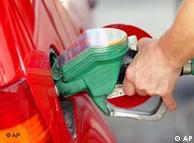 Although Merkel has long championed a three-way mix in electrical power generation — fossil, renewables and nuclear — she has in the past been cautious in openly advocating a reverse in official government policy to phase out nuclear power by 2021. Although Merkel has long championed a three-way mix in electrical power generation — fossil, renewables and nuclear — she has in the past been cautious in openly advocating a reverse in official government policy to phase out nuclear power by 2021.
That all changed at a top-level weekend meeting of her Christian Democrats (CDU) and its Bavarian sister-party, the Christian Social Union (CSU), in the Bavarian town of Erding.
The anti-nuclear decision, passed into law by the government of her Social Democrat predecessor Gerhard Schröder, was "absolutely wrong," Merkel said as the meeting ended Monday.Prices at the pump affect votersEnergy is moving up the priority scale of German voters.
One issue is price. Car fuel prices, whether diesel or petrol, surged through €1.50 ($2.40) a liter this spring, drawing a growl of anger from motorists and their organizations.
This weekend, a junior government minister suggested natural gas prices could surge 40 percent in the autumn, over and above a 25-percent hike already announced. Most Germans heat their homes with natural gas.
Even though it was immediately denied, the announcement by Environment Ministry state-secretary Michael Müller sparked alarm.Germans concerned over dependency on Russia Another issue is energy security. The German public is increasingly aware — and nervous — of the country's dependence on Russian energy. Another issue is energy security. The German public is increasingly aware — and nervous — of the country's dependence on Russian energy.
In 2007, Germany imported a third of its oil and gas from Russia, and the figure is set to rise when the Nord Stream gas pipeline under the Baltic sea goes onstream in 2011.
A third issue is environmental concern. Merkel has made sure that climate change has remained in the spotlight.
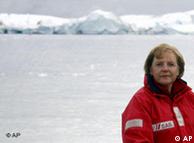
The chancellor pushed it to the top of the agenda during Germany's presidencies of the Group of Eight and the European Union last year, as well as making a highly publicized trip to Ilulissat in Greenland to view the dwindling Jakobshavn Glacier.Joining the bandwagon?Germany would not be alone in reversing an anti-nuclear policy.
Last month, newly elected Italian Prime Minister Silvio Berlusconi announced a return to nuclear power, rescinding a decision dating back to 1987, when Italians voted to phase out nuclear power just a year after the Chernobyl accident.
Sentiment in other anti-nuclear countries, such as Sweden and Belgium, is also changing in the light of indications that they cannot both generate the electricity needed and meet their emission targets under the Kyoto Protocol without nuclear power.
The small Baltic states are working on a plan to build a nuclear power station to cut their dependence on Russia.Widespread change in attitudeA sea change is taking place in European attitudes to nuclear power, as memories of Chernobyl and the 1979 Three Mile Island accident in the United States fade.
These factors lend support to Merkel's desire to reverse the decision taken by the previous SPD-Greens coalition to run down the nuclear sector.
Her skepticism is well known. Addressing parliament in the annual budget debate in November, traditionally an opportunity for the chancellor to take stock, she called for a "sensible course" on energy generation.
 She predicted "problems" in attempting to reconcile the twin demands of no new coal-fired power stations and a simultaneous phaseout of nuclear power. She predicted "problems" in attempting to reconcile the twin demands of no new coal-fired power stations and a simultaneous phaseout of nuclear power.
In terms of the law passed in 2000, Neckarwestheim 2, which went online in 1988 as the newest of Germany's nuclear plants, should be shut by 2021.CDU craves independenceThat decision is an explicit part of the coalition deal hammered out between Merkel and her SPD coalition partners, and the SPD is sticking firmly to it, making a change of course in the current legislative session all but impossible.
Merkel would like nothing better than to shed her awkward coalition partner following the September 2009 elections and revert to the traditional center-right arrangement with the minority FDP.
The liberal FDP, with around 13 per cent of the vote according to a recent poll, also backs reversing the nuclear phaseout.
By contrast, the SPD, under pressure from the socialist Left Party, has declined to around 24 percent support in the national opinion polls.
The CDU/CSU, on 34 percent, clearly believes it is onto a vote-winner that could help push it to a majority with the FDP, 15 months ahead of the elections.
|